
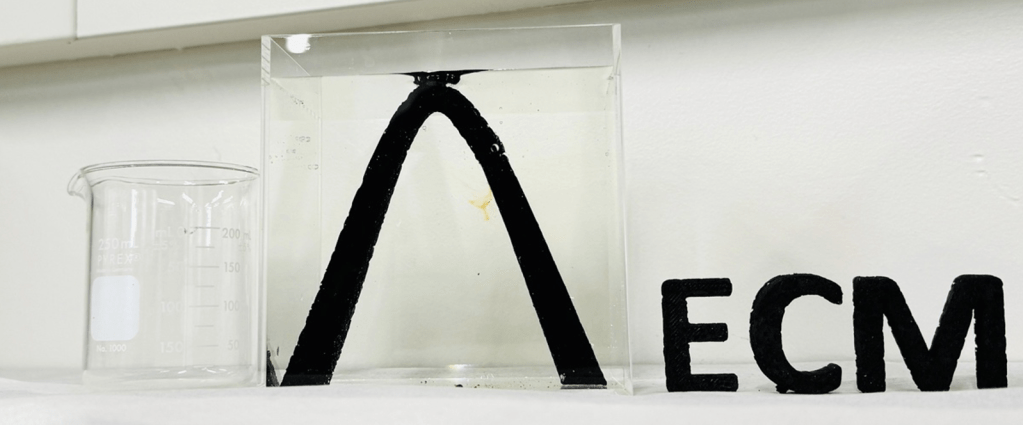
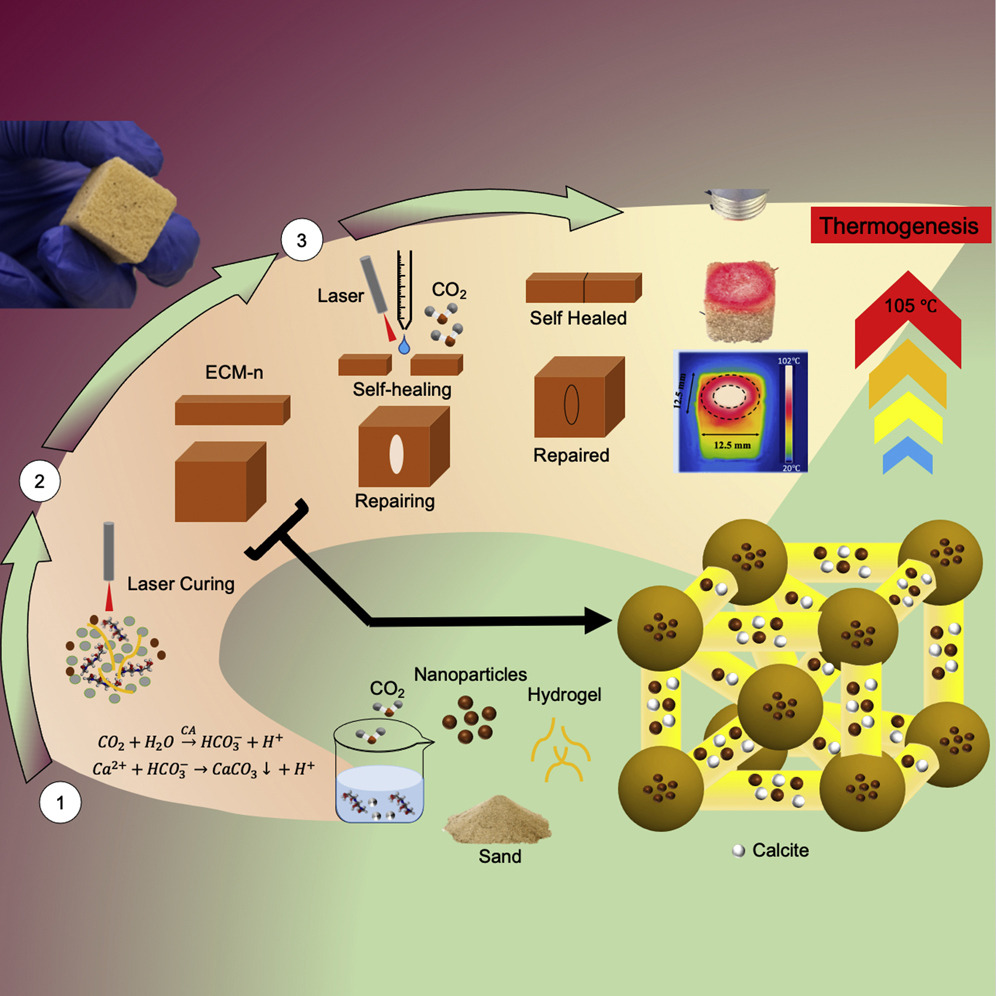
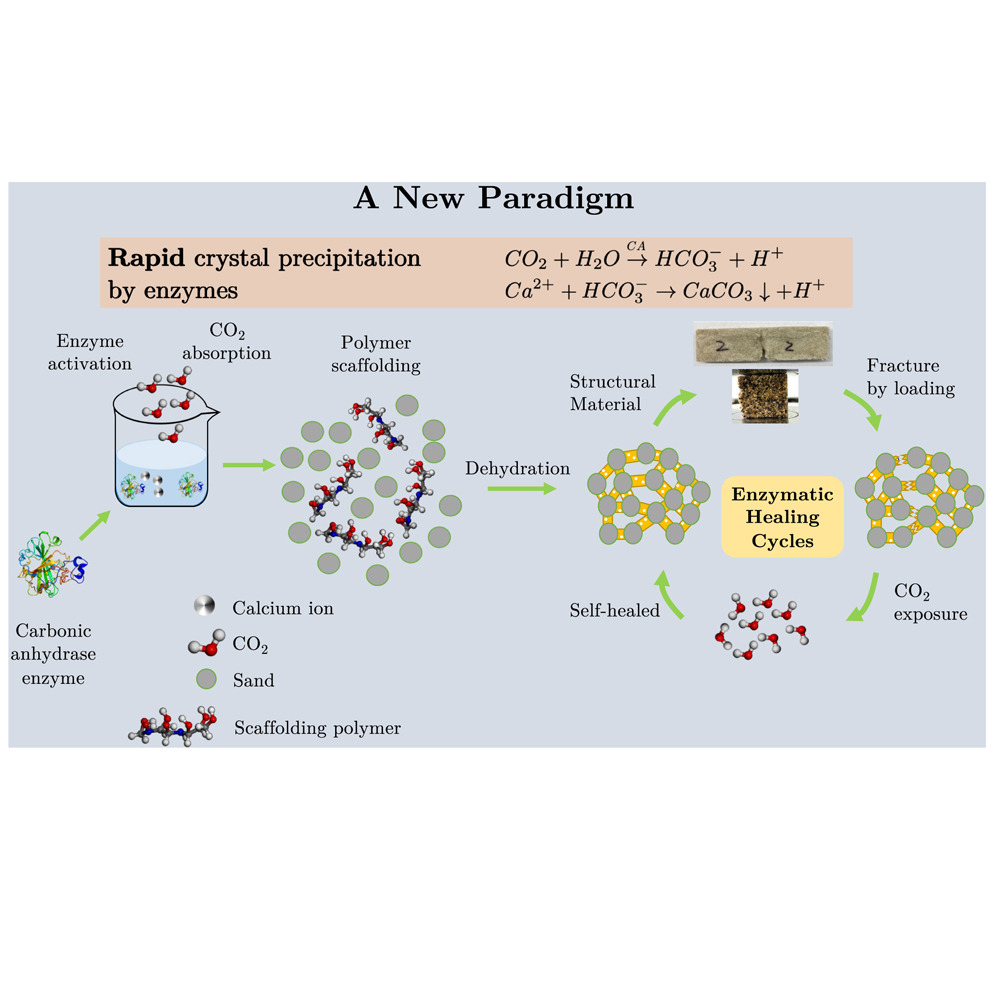
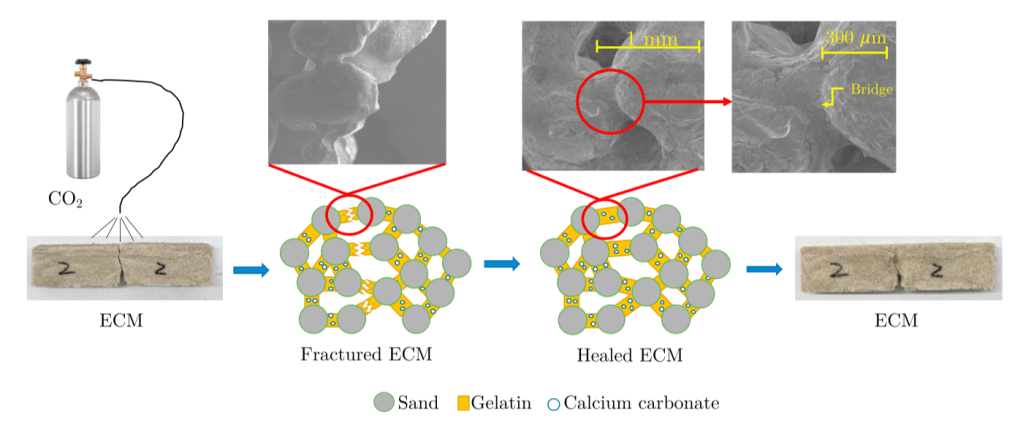
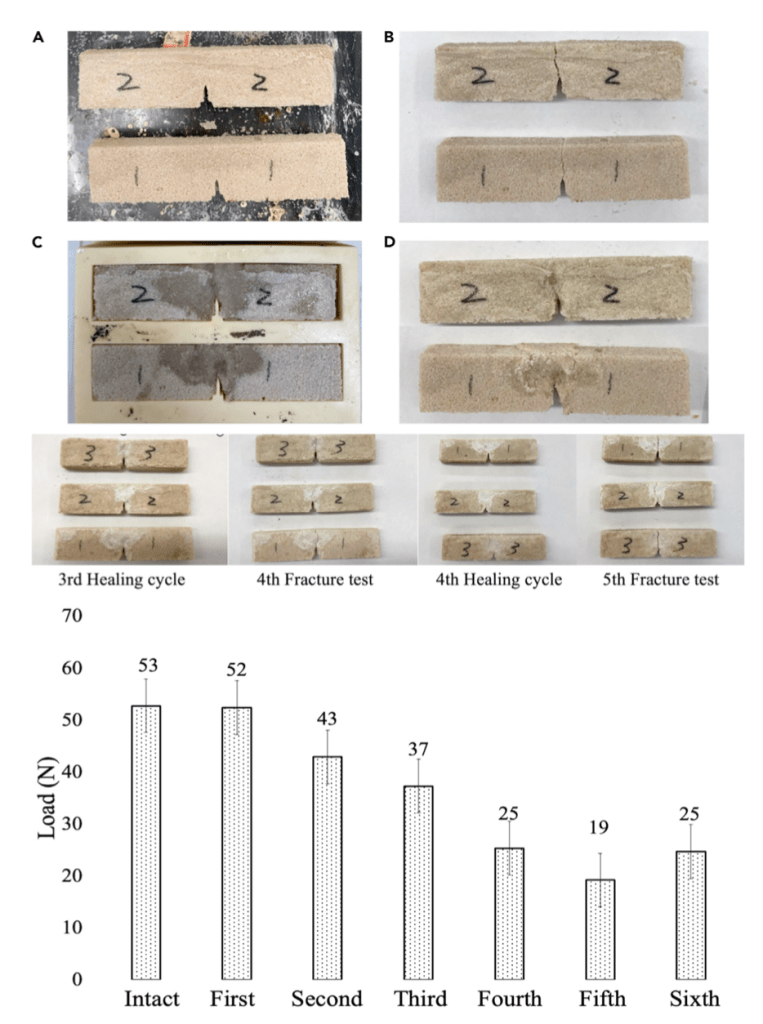


Concrete, the most used material in the world, is one of the main contributors to global CO2 emissions, and efforts to find an alternative to concrete have yet to be fully successful. Inspired by the process of CO2 exchange in biological cells, we introduce a novel method to create a negative-emission enzymatic load-carrying construction material (ECM) with self-healing capabilities. The concept proposed here uses carbonic anhydrase (CA) to catalyze the condensation of CO2 and water to promote the precipitation of calcium ions in aqueous solution as calcium carbonate crystals. The resulting ECM has a compressive strength and Young’s modulus that is more than twice that of the minimum acceptable values for cement mortar and other alternative building materials. The strengthening mechanism through the growth of mineral bridges that hold the sand particles in the ECM structure was also modeled and studied. This report provides a new path for the development of environmentally friendly construction materials at low cost.
 BIOINSPIRED MATERIAL DESIGN LAB